
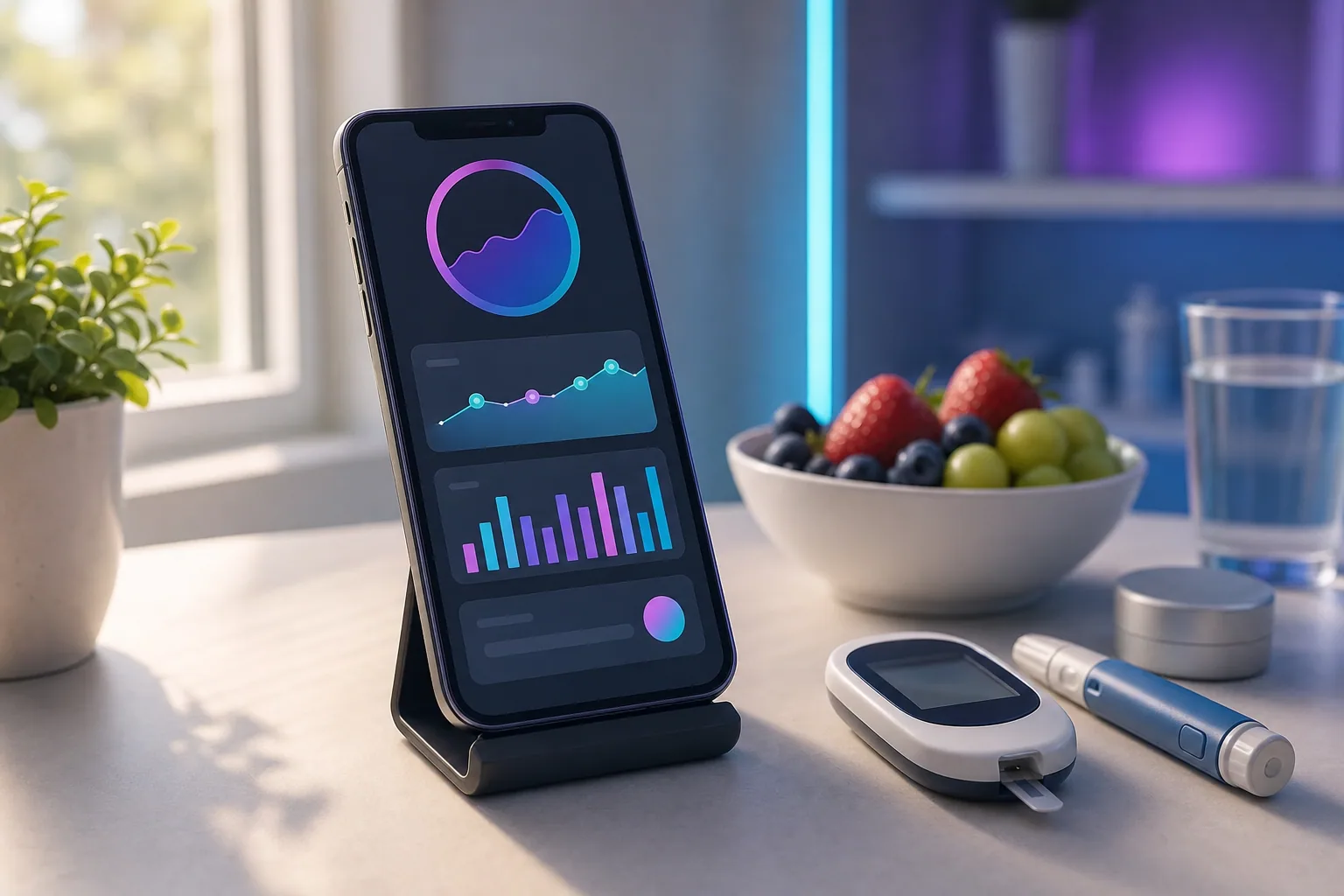
Managing insulin doses shouldn't require a medical degree or a calculator you have to dig out of a drawer. For people with diabetes, mealtime decisions happen fast, and accuracy matters. An insulin calculator app puts smart dosing tools in your pocket, turning carb counting and insulin math into a few quick taps.
But not all insulin calculator apps are created equal. Some feel clinical and outdated. Others bury essential features behind paywalls or confusing interfaces. The best ones combine accuracy with intuitive design, saving you time and mental energy when you need it most.
What Makes a Good Insulin Calculator App
Before comparing specific tools, it helps to know what separates a genuinely useful app from one that's just another digital Band-Aid.
A strong insulin calculator app should:
- Handle carb counting quickly without requiring you to search through endless food databases
- Let you input custom insulin-to-carb ratios and correction factors for your personal needs
- Provide clear, readable results in real time
- Work offline, since you need it at meals, not just at home with WiFi
- Respect your privacy and keep your data secure
- Stay free or offer clear pricing without hidden costs
- Use modern AI to learn from your patterns over time, if that's part of the experience
Many apps miss several of these. Some are stuck in 2015 design language. Others try to do everything (blood pressure tracking, step counting, meditation) and do nothing well.
The Clinical Approach vs. Human-Centered Design
Traditional insulin calculators, whether on your pump or from your endocrinologist's office, work. They're medically accurate. But they were designed by engineers, not by people who actually live with diabetes.
The problem: they're slow. A clinical calculator might require you to navigate five screens to input carbs and get a result. When you're hungry and your blood sugar is dropping, five screens feel like forever.
Modern insulin calculator apps are starting to change that. The best ones simplify the workflow without sacrificing accuracy. They ask you upfront for your settings once, then let you focus on the one thing that matters: how many carbs are in this meal.
Some apps also add a layer of AI, analyzing your dose history to suggest adjustments based on how your body actually responds. It's not replacing medical advice, but it's learning alongside you.
Key Features That Matter
When you're comparing insulin calculator apps, look for these specific capabilities:
Carb Database: A fast, searchable food database is non-negotiable. Entering "bread" shouldn't return 200 results. Ideally, it learns your favorites and suggests them first.
Custom Ratios: Every person's insulin sensitivity is different. Your 1:10 ratio (1 unit per 10 carbs) is not the same as someone else's. The app should let you input multiple ratios for different times of day.
Correction Factor: Sometimes you're not eating. Sometimes your blood sugar is high for other reasons. A good app handles correction doses separately and lets you combine them with meal insulin if needed.
Dose History: Logging is only useful if you can see trends. Look for apps that show you what you've dosed over time, helping you spot patterns.
Offline Functionality: Your phone might not have signal at a restaurant or during travel. The app should work without an internet connection.
Common Pitfalls in Insulin Calculator Apps
Before you download, watch out for these common mistakes:
-
Forced Connectivity: Apps that require an internet connection just to calculate are a headache. You should never be blocked from a dose decision because you're offline.
-
Complicated Food Entry: If adding a custom meal takes longer than eating it, the app has failed. Speed matters.
-
Poor Visual Design: Medical apps don't have to look dated. A clear, modern interface with good contrast and readable fonts makes a real difference in daily usability.
-
Hidden Paywalls: Some apps offer free basic insulin calculation but charge for dose history or trend analysis. Be upfront about cost before you invest time learning the interface.
-
No Privacy Control: Your diabetes data is deeply personal. Make sure the app is transparent about data storage and gives you full control over what's shared.
AI in Insulin Calculators: Hype vs. Reality
You'll see "AI-powered" slapped on a lot of apps. It's worth understanding what that actually means for insulin dosing.
Legitimate AI in this context learns from your real behavior. If you consistently dose high and your blood sugar runs low two hours later, good AI notices that pattern and might suggest a slightly lower dose next time. It's not replacing your doctor's settings, it's helping you dial them in through your actual lived experience.
Where AI tends to overpromise: it can't replace human judgment. An algorithm can't know that you're about to exercise, that you're stressed, or that you're eating something you've never tried before. The best AI insulin calculators stay humble about their limits and present suggestions, not commands.
Building Insulin Apps That Solve Real Problems
The most thoughtful insulin calculator apps come from people who actually use them. When a developer or team builds with personal experience, the app tends to reflect real-world frustrations and real-world solutions.
Komakon Studios, for instance, built KomaDose AI because of exactly this kind of personal need. Health and fitness challenges led to designing apps that solve everyday problems through elegant, AI-powered tools. That philosophy shows in the details: fast workflows, clean design, and a focus on what actually matters to the person using it.
When you're choosing between insulin calculator apps, ask yourself: does this feel like it was built by someone who gets it, or does it feel generic? The difference is usually obvious within the first few taps.
Moving Forward
The right insulin calculator app becomes invisible in your daily routine. You barely notice it's there because it just works. It's fast, it's accurate, and it gets out of the way so you can focus on living your life, not managing your diabetes.
If you've been using the same app for years because it's what your pump came with, or if you've been calculating doses on paper or in your head, it's worth exploring what's available now. The field has improved, and the best apps today combine medical accuracy with thoughtful, human-centered design.
Take time to test a few. Use whichever one feels right for how you actually live. Your daily diabetes management is too important to settle for a tool that doesn't serve you well.