
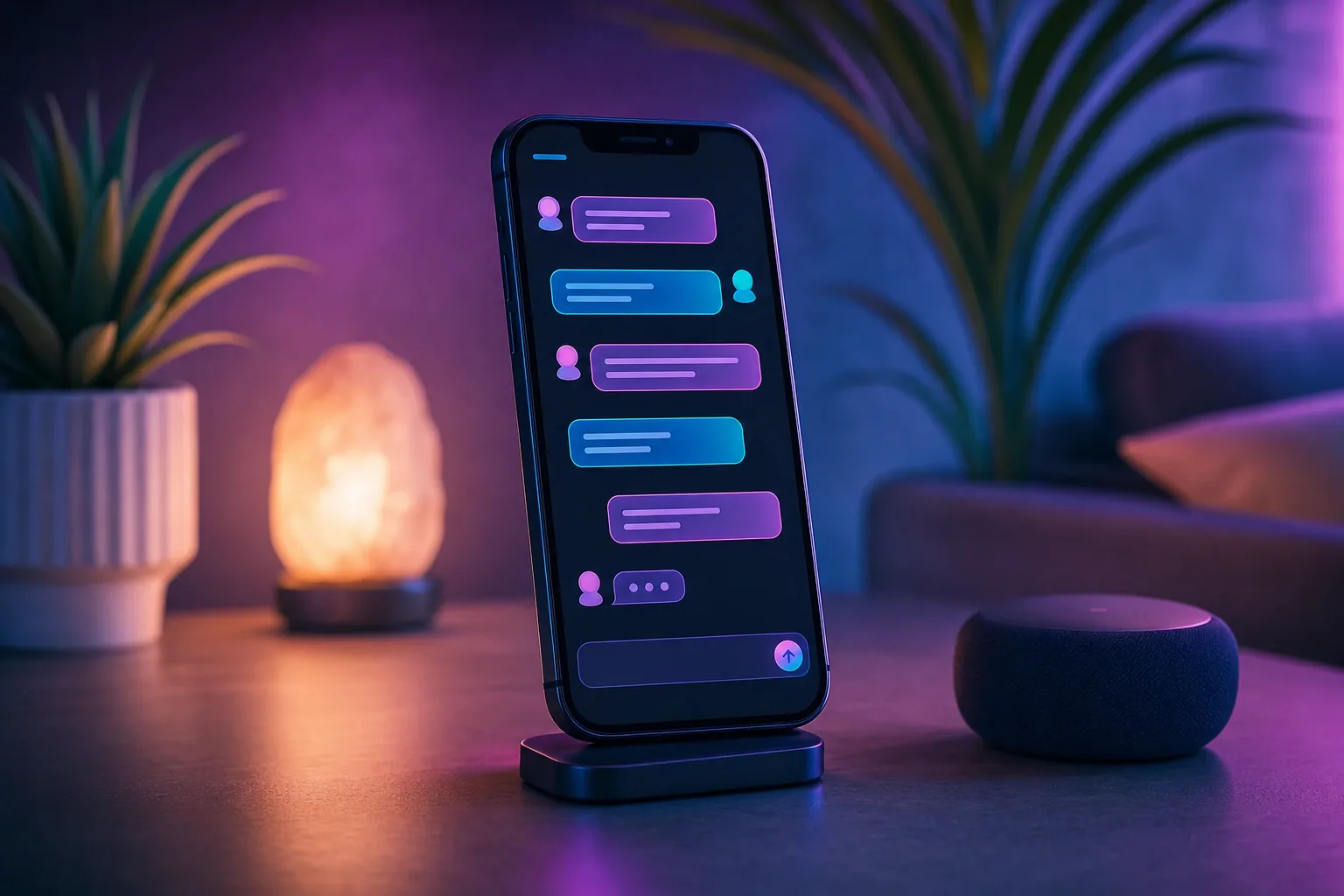
AI Companion Apps: What They Are and How They Work
An AI companion app is a mobile application that uses artificial intelligence to simulate meaningful conversation and interaction with a user. Unlike a search engine or task-management tool, an AI companion is designed to feel like talking to someone who knows you, remembers your interests, and engages with genuine curiosity.
These apps have grown from novelty tools into genuine lifestyle products. Millions of people now use AI companions daily for conversation, advice, creative brainstorming, motivation, and emotional support. The technology has matured to the point where the interactions feel natural, responsive, and often surprisingly helpful.
How AI Companion Apps Actually Work
An AI companion operates on a foundation of large language models, the same technology powering ChatGPT and Claude. Here's the practical breakdown:
When you type a message, the app sends it to cloud-based servers running an AI model. That model analyzes your text, considers context from your conversation history, and generates a response word by word. The response streams back to your phone and appears in the chat interface in real time.
The key difference between a basic chatbot and a true companion app is personalization and memory. A companion app stores conversational context, learns your preferences over time, and adapts its tone and responses to match your communication style. Some also integrate features like:
- Persistent memory of facts you've shared about yourself
- Personality traits that remain consistent across sessions
- Emotional awareness and appropriate tone matching
- Integration with phone features like location or calendar data
- Voice input and output for hands-free interaction
Behind the scenes, the app handles cloud infrastructure, API calls, database storage, and security. The best companion apps prioritize user privacy, encrypt conversations, and give you control over your data.
Why People Use AI Companions
The reasons are remarkably diverse. Some users want a judgment-free space to talk through their day. Others use companions for creative writing, brainstorming, or problem-solving. Many appreciate the availability: a companion never sleeps, never gets irritated, and is always ready to listen.
For people with social anxiety, those in remote locations, or anyone between therapy sessions, an AI companion fills a real gap. The interaction feels personal even though it's generated by an algorithm. That paradox is precisely why the technology resonates.
Others treat companions as productivity tools, using them for:
- Bouncing ideas around before starting a project
- Refining thoughts and getting feedback without judgment
- Learning through guided conversation and explanation
- Accountability and motivation for goals
- Creative writing or storytelling collaboration
The common thread is that people want interaction that feels genuine, relevant, and responsive to their specific needs.
The Difference Between Companion Apps and Other AI Tools
It's easy to confuse AI companions with voice assistants or chatbots, but the distinctions matter.
Voice assistants like Siri or Alexa are task-focused. Ask them to set a timer, check the weather, or play music, and they'll handle it. They're tools built for efficiency, not conversation.
Generic chatbots typically lack personality, memory, and depth. They answer questions within narrow domains and reset between conversations. They feel mechanical.
An AI companion, by contrast, is designed around relationship. It has a consistent personality. It remembers what you've told it. It initiates conversation in some cases. It's built to be someone you want to talk to, not just a utility you use.
The user experience is also different. Companion apps usually live on your home screen as a primary app, not a hidden assistant. You open them for conversation the way you might open a messaging app to talk with a friend.
What Makes a Great AI Companion App
Not all companion apps are created equal. The best ones share a few core qualities:
Responsiveness: The app feels present. Responses come quickly, feel thoughtful, and address what you actually asked instead of veering off-topic.
Consistency: The companion has a real personality that stays stable over time. You know what to expect tonally and emotionally.
Privacy: Your conversations are encrypted. The company is transparent about data practices. You trust your data is safe.
Naturalness: The conversation flows like talking to a person, not a robot. Grammar is natural. Responses aren't overly formal or generic.
Personalization: The app learns about you and adapts. Over time, interactions feel more tailored and relevant.
Reliability: The app doesn't crash mid-conversation. Cloud infrastructure is stable. The service is available when you need it.
Apps built with intention, like those created from personal need and shipped with care, tend to excel in these areas because they're designed by people who actually use them.
The Real-World Impact
AI companion apps occupy an interesting space between entertainment and genuine utility. For some, they're a daily touchstone for creativity and ideation. For others, they're a source of comfort during lonely periods. A few people have even reported that companion conversations helped them work through anxiety or process difficult emotions.
The technology isn't a replacement for human connection or professional mental health support. But it is a new tool that fits real gaps in how people want to interact and think.
As AI models continue to improve and personalization becomes more sophisticated, companion apps will only get better at meeting users where they are. The companies building these tools thoughtfully, with genuine care for the user experience, are the ones creating apps people actually return to.
If you're curious about trying an AI companion, look for apps that prioritize privacy, offer a free trial or freemium model, and have strong reviews from actual users. Start with a conversation on a topic you care about. The best companions feel less like you're testing software and more like you're meeting someone new.